
If you’re asking how much it costs to build a pool in Phoenix, the real answer is that it depends on far more than just size. Phoenix is one of the most active markets for pool construction, so homeowners often compare multiple quotes. The problem is that most quotes are not structured the same way. Some include only the basics, while others factor in upgrades, site work, or long-term performance. Without understanding what’s actually included, it’s easy to underestimate the true cost.
The biggest mistake homeowners make is focusing only on the starting price. A low initial quote can quickly increase once you add finishes, features, or necessary adjustments during construction. On the other side, a higher quote may already include upgrades that improve durability and reduce long-term costs.
Simply Fun Pools approaches pool construction with a focus on clarity and value. Instead of vague estimates, the goal is to provide a realistic understanding of what your pool will cost based on your space, your goals, and how you plan to use it.
Average Cost to Build a Pool in Phoenix
Typical Price Ranges
Pool costs in Phoenix generally fall into three tiers, but the differences between them are driven by design, materials, and the level of customization.
An entry-level pool typically includes a basic layout with minimal features. This is focused on functionality rather than design and usually sticks to standard shapes, finishes, and equipment.
A mid-range pool introduces more customization. This can include a custom shape, upgraded interior finishes like pebble, improved tile selections, and added features such as lighting or small water elements. This is where most homeowners land because it balances appearance and cost.
A high-end pool is fully customized. These projects often include premium materials, advanced equipment, integrated outdoor design, and multiple features like automation, heating or cooling systems, and aesthetic upgrades. At this level, the pool becomes a centerpiece of the backyard rather than just an addition.
The reason prices increase quickly between these tiers comes down to materials and customization. Upgraded finishes, additional features, and more complex designs require more labor and higher-quality components, which significantly impact the final cost.
What’s Included in Base Pricing
Base pricing is where many homeowners get confused, because not all builders include the same components. Simply Fun Pools approaches this differently by focusing on a clear planning process that outlines the full scope before construction begins.
At a minimum, base pricing includes excavation and site preparation, covering yard preparation and handling standard digging conditions. The pool structure itself is built with durable materials such as gunite or shotcrete, designed to perform well in Arizona’s climate. A standard filtration system is included to keep the pool clean and operational, along with basic decking that provides functional access around the pool.
What sets Simply Fun Pools apart is the structured planning approach. Instead of vague estimates, they provide defined plan options that help homeowners understand layout, features, and costs upfront. This reduces the risk of unexpected upgrades during construction and creates a more predictable project.
It is just as important to understand what is not included in most base quotes. Items like upgraded interior finishes, advanced lighting, water features, heating or cooling systems, and expanded decking or landscaping are typically additional. Utility upgrades, such as electrical or gas work, may also fall outside the base price depending on the property.
Key Factors That Impact Pool Cost

Pool Size and Shape
The size and shape of your pool are two of the biggest drivers of cost. Larger pools require more materials and more labor, which increases both construction time and overall price.
Standard shapes are typically more cost-effective because they are easier to design and build. Custom shapes, on the other hand, require additional planning, layout work, and precision during construction. That added complexity increases both labor and cost. The more unique the design, the more it will impact the final price.
Materials and Finishes
Finishes are where costs can vary significantly, and they also have the biggest impact on how your pool looks.
Interior finishes range from basic plaster to upgraded pebble or specialty materials. Plaster is more affordable but may require more maintenance over time. Pebble and upgraded finishes cost more upfront but offer better durability and a more premium appearance.
Tile and coping also play a major role. Entry-level options keep costs down, while premium selections add both visual appeal and expense. These choices are often where homeowners decide how much to invest in the pool’s overall look.
The key point is that finishes do not just affect cost. They determine the pool’s final appearance and long-term performance.
Equipment and Technology
The type of equipment you choose affects both upfront cost and long-term efficiency.
Standard equipment includes basic pumps and filtration systems that get the job done. Upgraded equipment can include higher-efficiency pumps, heaters, or additional systems designed to improve performance.
Smart automation is becoming more common, allowing homeowners to control their pool from a phone. This adds convenience but also increases the initial investment.
Energy-efficient options can cost more upfront but may reduce operating costs over time. Deciding between standard and upgraded equipment comes down to how you plan to use your pool and how important long-term efficiency is to you.
Backyard Conditions and Site Prep
Your property itself can have a major impact on cost, even before construction begins.
Soil conditions play a big role. Some properties are easier to excavate, while others require more effort due to hard ground or rock, which increases labor and equipment needs.
Access is another factor. If the equipment cannot easily reach the backyard, additional labor or specialized methods may be required, which adds cost.
Existing structures can also affect pricing. If demolition or adjustments are needed to make space for the pool, that work must be factored into the overall project.
These site-specific factors are often overlooked at the beginning but can significantly influence the final cost once construction starts.
Popular Add-Ons That Increase Cost
Water Features
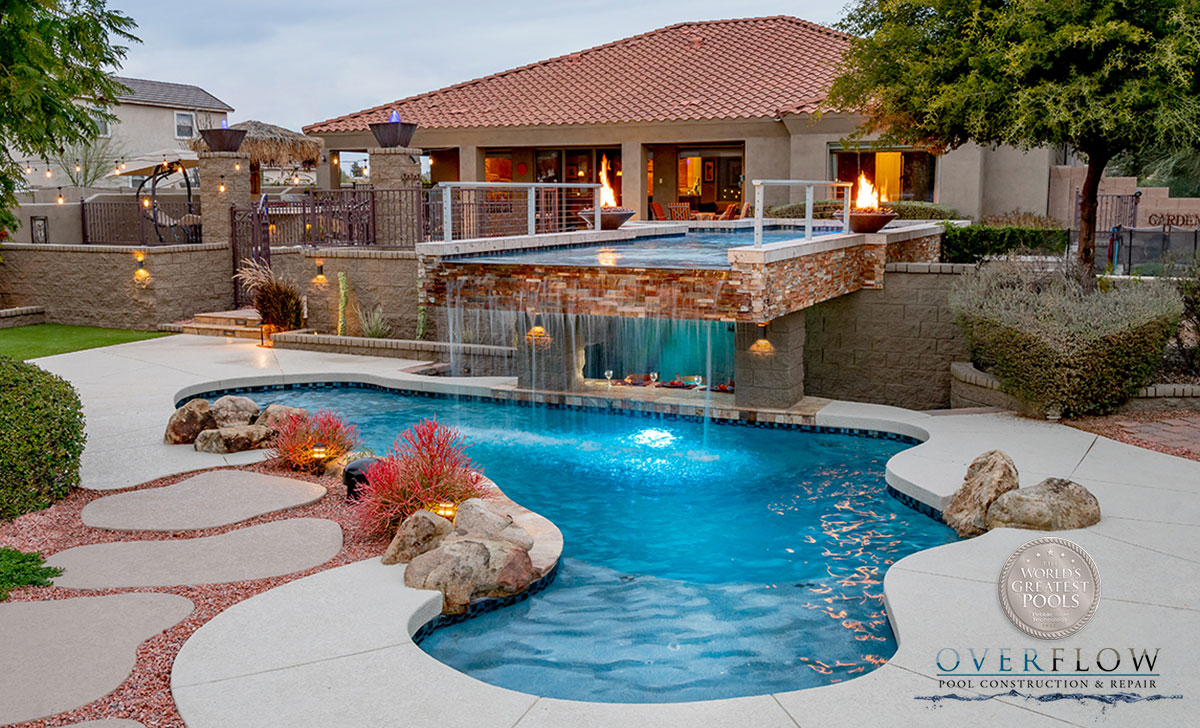
Water features are one of the most common upgrades homeowners choose, and they have a direct impact on both cost and overall design.
Options like waterfalls, deck jets, and bubblers add movement and sound, which changes how the pool feels. They also require additional plumbing, equipment, and installation time, which increases the price.
While they raise the upfront cost, they also elevate the visual appeal and can make the pool feel more like a custom, resort-style space.
Lighting and Aesthetics
Lighting plays a major role in how the pool looks and functions, especially in Phoenix, where evening use is common.
LED lighting and color-changing systems are popular upgrades. These options allow you to control brightness and color, creating different moods depending on how the pool is being used.
The impact goes beyond appearance. Good lighting extends the pool’s usability into the evening, improves safety, and makes the entire backyard feel more finished.
Heating and Cooling Options
In Phoenix, temperature control is a key consideration for many homeowners.
Pool heaters let you use the pool in cooler months, while chillers help keep the water comfortable during extreme summer heat. Both options add to the initial cost but can significantly extend how often the pool is used throughout the year.
The decision often comes down to how important year-round usability is for your household.
Landscaping and Outdoor Integration
The pool itself is only part of the project. How it connects to the rest of the backyard can significantly impact both cost and overall experience.
Upgrades like expanded decking, pavers instead of standard concrete, and integrated outdoor living areas all increase the investment. These elements help tie the pool into the surrounding space, creating a more cohesive and functional backyard.
When done correctly, this integration turns the pool into a complete outdoor environment.
Timeline and Cost Relationship
How Build Time Affects Cost
The timeline of a pool build has a direct impact on cost, even if it is not always obvious at the start.
Faster builds can increase labor costs. Accelerating a project often requires more crews, longer workdays, or prioritizing one project over others. That added intensity can raise the overall price.
On the other side, delays can also increase costs. Extended timelines may lead to additional labor, rescheduling, or adjustments due to weather, permitting, or material availability. The longer a project stretches, the more opportunities there are for costs to rise.
The goal is not to rush the build or let it drag out. It is to keep the project moving at a steady, realistic pace with clear expectations from the beginning.
Typical Pool Build Timeline in Phoenix
Pool construction in Phoenix follows a general sequence, but the timeline can vary depending on the project and external factors.
The process starts with the design phase. This is where the layout, features, and overall plan are finalized. The more detailed this step is, the fewer surprises occur later.
Next is permitting. This step depends on city requirements and, in some cases, HOA approval. Timelines can vary, and this is often one of the biggest variables in how quickly a project moves forward.
Construction follows once approvals are in place. This includes excavation, structural work, plumbing, electrical, and finishing. Each stage builds on the last, so delays in one phase can impact the entire timeline.
A realistic expectation for most pool builds in Phoenix is several weeks to a few months from start to finish, depending on complexity and conditions. Projects with more customization or challenging site conditions may take longer.
Setting realistic timelines up front helps avoid frustration and allows homeowners to plan accordingly.
Why Choosing the Right Pool Builder Matters
Not All Quotes Are Equal
One of the biggest mistakes homeowners make is assuming all pool quotes are comparable. In reality, two quotes can look similar in price but differ significantly in what they include.
Differences often come down to the materials used, the quality of the included equipment, and the level of warranty provided. Lower-cost quotes may rely on entry-level components or exclude key features that will be added later. Higher-quality builders tend to use better materials and more reliable systems up front.
Without understanding these differences, it is easy to choose a quote that looks cheaper but ends up costing more over time.
Importance of Transparent Pricing
Transparent pricing is what separates a smooth project from one filled with surprises.
A clear scope of work outlines exactly what is included in the project and what is not. This helps homeowners make informed decisions and avoid unexpected costs during construction.
Hidden costs usually come from unclear proposals. Items such as upgrades, site conditions, or equipment changes are added later, increasing the total price beyond the original estimate.
When pricing is transparent from the beginning, it becomes much easier to stay on budget and avoid frustration.
How Simply Fun Pools Approaches Pricing
Simply Fun Pools focuses on clarity and long-term value rather than just presenting a low starting number.
Each project is built around a clear cost breakdown so homeowners understand exactly what they are paying for. The planning process is structured to define the scope early, which reduces the likelihood of changes and unexpected expenses later in the build.
The goal is not just to build a pool, but to deliver a finished product that performs well over time. That means using the right materials, the right equipment, and a pricing approach that reflects the true cost of doing the job correctly
Understanding Cost Helps You Build Smarter
Building a pool in Phoenix is not a one-size-fits-all project. The final cost depends on a combination of size, design, materials, equipment, and site conditions. Small decisions in each of these areas can significantly impact the total investment.
Planning ahead leads to better outcomes. You get a pool that fits your space, lifestyle, and budget without any unexpected changes during construction. It also reduces stress and keeps the project on track from start to finish.
If you are considering building a pool, the next step is getting a clear and accurate understanding of what your project will cost.
Simply Fun Pools works with homeowners throughout Phoenix to design and build pools tailored to each property and budget. The focus is on transparent pricing, custom design, and delivering a finished product that performs well over time.
FAQs
How much does it cost to build a pool in Phoenix?
The cost depends on the pool size, level of customization, and included features. Entry-level pools cost less, while custom designs with upgrades can significantly increase the total investment.
What is the cheapest way to build a pool?
The most cost-effective approach is a basic design with minimal upgrades. Standard shapes, entry-level finishes, and limited features help keep the price lower.
How long does it take to build a pool?
Most pool projects in Phoenix take several weeks to a few months from design to completion. The timeline depends on permitting, complexity, and site conditions.
What adds the most cost to a pool?
The biggest cost drivers are size, finishes, and added features. Custom shapes, upgraded materials, and equipment enhancements can quickly increase the final price.
Are pools worth it in Phoenix?
Pools tend to get high usage in Phoenix due to the heat, making them a practical and enjoyable addition for many homeowners.
Can I finance a pool?
Many pool builders offer financing options, allowing homeowners to spread the cost over time instead of paying up front.